Every courier in South Africa checks two weights: what the parcel weighs on the scale and what it would weigh at a set density for its size. You pay for whichever is higher. Light, bulky parcels such as pillows, lampshades, shoes in their boxes and anything packed with lots of void fill are billed on volume. This calculator shows the volumetric weight, the chargeable weight and the billed weight after rounding, for one parcel or a batch of identical parcels.
How couriers work out volumetric weight
Multiply the length, width and height in centimetres and divide by the courier's divisor. Most South African couriers use 5,000, so a box of 40 x 30 x 30 cm is 36,000 cm³, which counts as 7.2 kg. If the parcel itself weighs 4.5 kg, you are billed for 7.2 kg, usually rounded up to 8 kg. Some road freight and economy services divide by 4,000, which makes the same box 9 kg, and a few international services use 6,000. The divisor is printed on the rate card or in the terms of your account, so check it before you compare prices.
Couriers measure the outside of the parcel at its widest points. A bulging box, a courier bag stuffed past its flat size or a handle sticking out all count. Most depots measure every parcel on an automatic scanner, so the size you declare is checked.
Cutting the volumetric weight of your parcels
- Right size the box. Two centimetres of empty space on every side of a medium box adds about a fifth to the volumetric weight. Stock a few carton sizes that fit your best sellers rather than one box for everything.
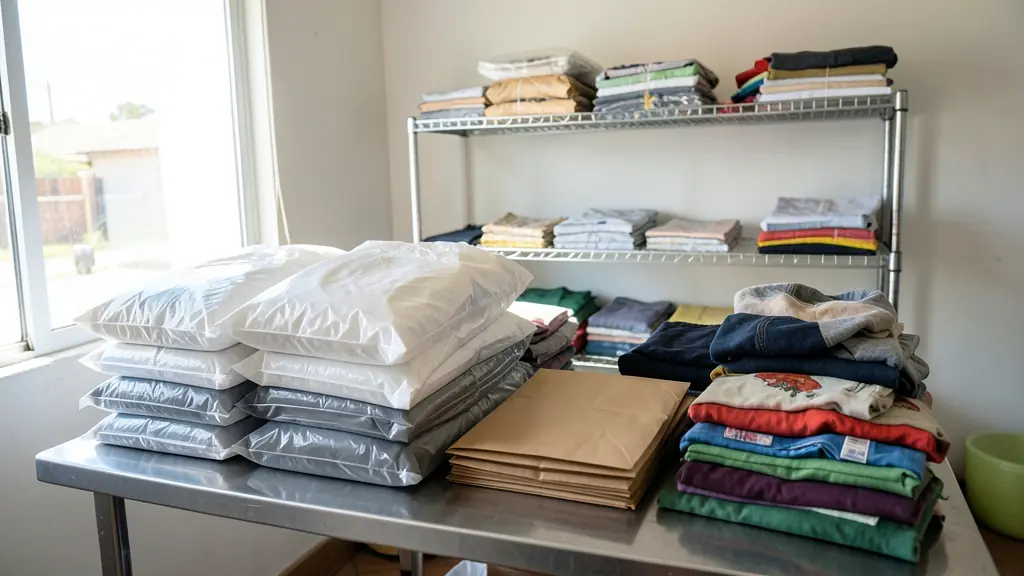
- Use a bag for soft goods. Clothing, linen and soft toys travel well in courier bags, which are billed on their filled size and add almost nothing to the weight.
- Swap bulky void fill. Air pillows and loose fill protect well but take space. Kraft paper or a snug fit with corner pieces from protective packaging lets you drop a box size.
- Flat pack where you can. Products shipped flat, folded or nested cost far less to send than assembled ones.
A worked example for an online shop
A shop in Pretoria sends 300 parcels a month of cushions weighing 1.2 kg each in a 50 x 40 x 30 cm box. At a divisor of 5,000 each box counts as 12 kg, ten times its real weight. Moving to a 45 x 35 x 20 cm box with the cushion lightly compressed brings it to 6.3 kg, billed at 7 kg. That saves 5 kg on every parcel, or 1,500 kg a month, which at a typical account rate per kilogram above the first band is a real saving. The smaller boxes also cost less per unit and take less space in the packing room.
Size and weight limits to know
Most door to door courier services in South Africa accept parcels up to about 30 to 70 kg each, with a longest side of around 1.2 to 1.5 m, depending on the service. Longer or heavier items often move to a freight or pallet service with its own rates. Locker and counter drop off services usually have fixed box sizes and much lower weight limits. If your parcels sit near a limit, design the box to stay under it with room to spare, because a few millimetres over can move the parcel into a dearer band.
Frequently asked questions
What is the volumetric weight formula?
Do couriers use the inside or outside size of the box?
Why does my parcel cost more than its weight?
Does volumetric weight apply to pallets?
More packaging tools
- Carton size and boardCarton volume, outside size, blank size, board area and weight for a slotted boxTL-02
- Cartons per palletCartons per layer and per pallet, load height, weight and pallets per containerTL-03
- Pallet wrap filmStretch film per pallet in metres, grams and rand, with rolls needed per monthTL-04
- Packaging tapeTape per box, boxes per roll, rolls per month and tape cost for I, L and H sealsTL-05
- Bubble wrapSheet size, metres off the roll, rolls needed and bubble wrap cost per itemTL-06
- Moving boxesHow many small, medium, large and wardrobe boxes, tape and paper for your moveTL-07
- Compare supplier quotesPut up to three quotes side by side: landed cost per unit, VAT and break-even quantityTL-08
- Film thickness converterConvert micron, gauge, mil and mm, then film weight, m² per kg and grams per bagTL-09
- Corrugated board guideFlute chart, box styles and a selector that suggests the right board for your loadTL-10
- Plastic recycling codesWhat resin codes 1 to 7 mean: uses, heat, food contact and recycling in South AfricaTL-11